


Media Contacts: Chris Gilroy & Brian Gilroy | WildLife Partners

Land-and-wildlife investing is a real asset strategy built around acquiring and managing land with underlying agricultural, recreational, conservation, and wildlife value. Investors are increasingly exploring it for diversification, tax efficiency, inflation resilience, and tangible asset ownership. But the story goes deeper than a simple real estate play. This strategy sits at the intersection of financial markets, natural capital, and the growing recognition that well-managed land creates value in ways that traditional portfolios simply cannot replicate. The WildLife Partners Land & Wildlife Fund reflects this broader shift by combining land ownership with wildlife and conservation-driven value inside a structured real asset strategy.
Why Traditional Portfolios Are Driving Investors Toward Alternatives
Many investors are rethinking portfolio construction because traditional public-market allocations no longer solve every problem they once did.
Stocks remain volatile. Bonds have not always delivered the stability investors expected. Inflation has changed the way people think about purchasing power. And for high-income investors, a portfolio made up entirely of public markets can feel both overexposed and tax-inefficient.
That shift is not about chasing something exotic. It is about looking for assets that behave differently. Land, conservation assets, and nature-linked investments occupy a different position in the economy than equities or fixed income. Their value is shaped by physical characteristics, location, ecological health, and productive use rather than by sentiment cycles in financial markets.
The private sector has increasingly recognized this. Private capital has been moving toward real assets, natural capital, and conservation-linked strategies as investors look for portfolio components that are less dependent on public-market behavior. The evolution from purely financial portfolios toward ones that include tangible, land-based assets reflects both a practical search for diversification and a growing awareness of the importance of nature to long-term economic stability. That is part of what makes the WildLife Partners Land & Wildlife Fund relevant in this conversation: it gives investors exposure to a strategy built around real land, real operations, and long-term stewardship rather than another paper-based alternative.
Natural Capital: The Foundation of Long-Term Land Value
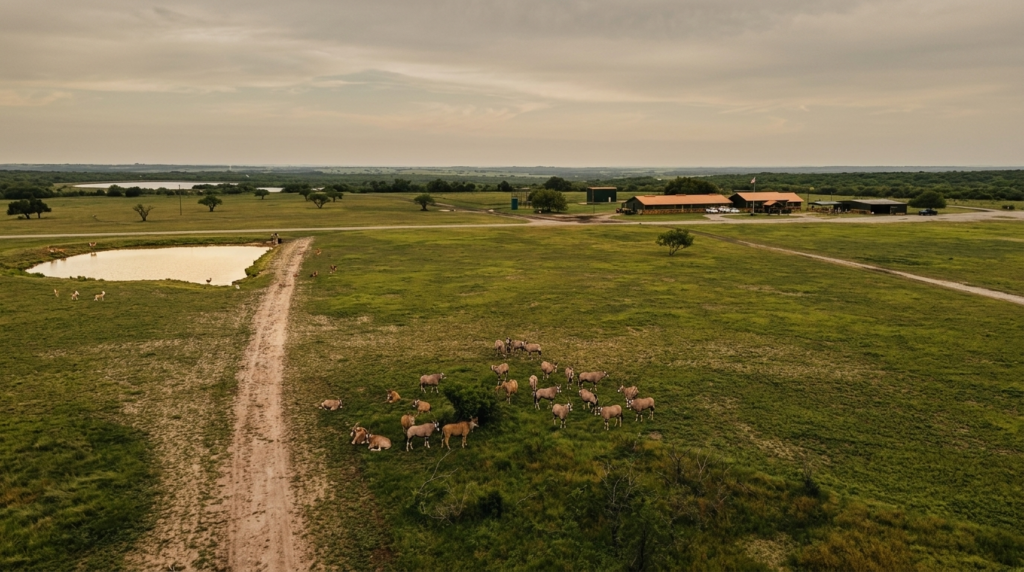
Quick definition: Natural capital refers to land, forests, water systems, biodiversity, and ecological resources that generate measurable economic value over time.
What Natural Capital Means for Investors
Natural capital refers to the stock of natural resources and ecosystems that provide valuable services to people and economies. It includes forests, water systems, soil, biodiversity, and the broader ecological infrastructure that supports agriculture, clean water, carbon sequestration, and community livelihoods. For investors, natural capital is increasingly understood not as a soft concept but as a genuine foundation of economic value that has been underpriced in traditional financial markets for decades.
Land with high natural capital, including healthy soil, water management capacity, species diversity, and productive ecological functions, tends to hold and grow its value more durably than degraded land with limited biological productivity. As regulatory frameworks around land use, carbon, and conservation continue to evolve, the gap between well-managed and poorly managed land is likely to widen in financial markets.
WildLife Partners is built around this understanding. The fund’s approach to land acquisition and management explicitly incorporates natural capital thinking, recognizing that ecological health and financial returns are not competing objectives but reinforcing ones. Land that supports thriving wildlife populations, healthy forests, and productive agriculture is land that creates durable value for investors, communities, and society.
Why Natural Capital Is Gaining Attention in Financial Markets
For a long time, the financial markets largely treated natural capital as a free input rather than a capital asset that could be depleted or enhanced. That view is changing. Climate change, water scarcity, deforestation, and biodiversity loss have made the physical risks associated with degraded ecosystems more visible and more financially material. Institutions ranging from central banks to sovereign wealth funds now assess natural capital exposure as part of portfolio risk management.
Private capital has begun flowing into strategies that can both benefit from and contribute to the protection and restoration of natural capital. Land-and-wildlife strategies occupy a unique position in this evolution because they combine private ownership with active management, creating both financial returns and measurable ecological outcomes. The ability to generate new revenue streams while improving the land’s natural capital base is precisely what distinguishes well-structured land strategies from passive land holding.
Why now?
Investors are increasingly focused on:
- inflation protection
- public market volatility
- climate resilience
- diversification
- new ecosystem service markets
- long-term scarcity of high-quality land assets
Ecosystem Services: How Land Creates Value Beyond the Visible
Understanding Ecosystem Services
Ecosystem services are the benefits that functioning ecosystems provide to people and economies. They include provisioning services like food and water, regulating services like carbon storage, water filtration, and flood management, cultural services like recreation and aesthetic value, and supporting services like soil formation and nutrient cycling.
For land investors, ecosystem services represent a set of value drivers that are often overlooked in traditional real estate analysis but increasingly recognized in both regulatory frameworks and private markets. A property with strong carbon storage capacity, water management functions, and habitat quality is not just an agricultural asset. It is a platform for multiple value streams that compound over time.
The growing market for ecosystem services has created new revenue streams for landowners willing to manage their properties with ecological health in mind. Carbon markets, conservation easements, wetland mitigation banking, and water quality trading are all mechanisms through which well-managed land can generate income tied directly to its natural capital. These are not theoretical. They are active markets with real transactions, governance frameworks, and institutional participation.
Ecosystem Services and the WildLife Partners Strategy

The WildLife Partners strategy is designed around properties that can support multiple ecosystem services simultaneously. Land that hosts diverse wildlife populations, maintains healthy forests, supports regenerative agriculture practices, and preserves natural water systems is land that creates value across multiple dimensions, financial, ecological, and social.
This multi-layered approach is part of what makes the strategy compelling to investors who want more than a single return driver. Rather than depending entirely on land appreciation or a single revenue stream, the WildLife Partners model creates a portfolio of value drivers where ecosystem services strengthen the long-term investment case rather than being treated as incidental to it. The importance of this layered approach becomes clear when you consider how much value can be created through thoughtful land management versus how much value can be eroded through degradation, deforestation, or conversion to low-productivity uses.
Biodiversity Conservation: A Financial Case, Not Just an Environmental One
Why Biodiversity Matters to Investors
Biodiversity conservation is increasingly understood to have direct financial relevance, not just environmental importance. Ecosystems with high biodiversity are more resilient to physical risks, including drought, disease, and invasive species, than monocultures or degraded habitats. They provide more stable and diverse ecosystem services over time. And they tend to support more productive and sustainable agriculture, wildlife operations, and recreational uses than low-biodiversity landscapes. This is part of what makes strategies like WildLife Partners compelling to certain investors: biodiversity is not treated as a side benefit, but as part of the long-term value of the land itself.
The economic case for biodiversity conservation is supported by a growing body of research and an expanding set of regulatory frameworks. The Taskforce on Nature-related Financial Disclosures, the Convention on Biological Diversity, and multiple national policy frameworks are creating governance structures that are beginning to translate biodiversity value into market value. Private sector institutions are increasingly required or incentivized to assess and report their biodiversity impacts and dependencies.
For land investors, biodiversity conservation is therefore not just an ethical choice. It is a strategy for protecting and enhancing the natural capital that underpins long-term financial returns. Properties with high biodiversity support more stable operations, attract stronger conservation partnerships, and carry more durable value in an environment where ecological health increasingly matters to financial markets. In that sense, WildLife Partners fits into a broader shift toward land strategies where stewardship and financial performance are increasingly connected rather than separate ideas.
Habitat Restoration and the Role of Active Management
Habitat restoration is one of the most powerful tools available to land investors who want to improve both ecological health and long-term asset value. Restoring native vegetation, re-establishing wildlife corridors, managing invasive species, and improving water management are all forms of habitat restoration that can meaningfully increase a property’s biodiversity, productivity, and long-term value.
The WildLife Partners approach integrates habitat restoration into the land management model rather than treating it as a separate conservation project. Restoration efforts are coordinated with operational and revenue objectives, creating properties where improving ecological health is inseparable from improving financial performance. For example, improving riparian corridors benefits both water management and wildlife habitat, which in turn supports both ecosystem services revenue and long-term land value appreciation.
This integrated approach to habitat restoration is one of the clearest ways in which the WildLife Partners strategy differs from passive land investment. Active management that improves biodiversity conservation and ecological function is a form of value creation that compounds over time, producing a different risk-return profile than simply acquiring land and waiting.
Climate Change: Physical Risks, Resilience, and Land Value
How Climate Change Affects Land Investments
Climate change is reshaping the physical landscape of land investing. Rising temperatures, changing precipitation patterns, increased frequency of extreme weather events, and shifting habitat ranges all affect how land performs as an investment. Properties with robust water management infrastructure, diverse ecological function, and strong habitat quality are better positioned to absorb these physical risks than degraded or monoculture landscapes.
For land-and-wildlife investors, climate resilience is both a risk management consideration and a value driver. Land that maintains healthy forests, functional wetlands, diverse species populations, and productive soil is land that can adapt more effectively to changing climate conditions. The carbon storage capacity of well-managed forests and grasslands may also become increasingly valuable as carbon markets mature and regulatory frameworks expand.
Importantly, land investments that support climate resilience also tend to benefit from the growing private sector and public policy attention to nature-based solutions. Infrastructure investments in habitat restoration, regenerative agriculture, and water management are increasingly supported by both government programs and private capital flows, creating additional tailwinds for well-positioned land assets.
Regenerative Agriculture, Forests, and Carbon Storage
Regenerative agriculture is a set of farming and land management practices that actively improve soil health, biodiversity, water retention, and carbon storage rather than depleting these natural resources over time. It represents a significant evolution from conventional agriculture, producing food and fiber while improving rather than degrading the natural capital base.
For land investors, regenerative agriculture creates several advantages. It improves soil productivity over time, reducing input costs and supporting more durable agricultural cash flows. It can generate carbon credits and other ecosystem services revenue. It reduces physical risks associated with soil degradation and water stress. And it positions properties to benefit from growing consumer and institutional demand for sustainably produced food and fiber.
Forests are another critical asset class within the natural capital framework. Healthy forests, with their canopy trees, understory vegetation, and complex soil ecosystems, provide carbon storage, water management, biodiversity habitat, timber value, recreation opportunities, and protection from erosion and flooding. Deforestation and forest degradation have been identified as major drivers of biodiversity loss and climate change, which is why forest preservation and restoration are increasingly supported by regulatory frameworks, carbon markets, and private capital.
The WildLife Partners strategy incorporates both regenerative agriculture and forest management principles in the properties it acquires and operates. Rather than extracting value from the land at the expense of its ecological function, the approach is designed to build natural capital over time, creating assets that are more valuable in ten years than they are today because the land itself is healthier, more productive, and better positioned in the markets for ecosystem services and conservation value.
What Makes Land a Powerful Alternative Asset
Land has several characteristics that make it especially attractive inside a real-asset allocation, and those characteristics are amplified when the land is actively managed to build natural capital rather than deplete it.
Scarcity is foundational. Land is finite, and particularly scarce land with high biodiversity, water access, and ecological value is becoming rarer as development pressure, deforestation, and habitat degradation reduce the supply of high-quality natural assets.
Inflation protection follows naturally from scarcity. Land values and land-linked revenue sources, including agriculture, recreation, and ecosystem services, may benefit from inflationary environments, especially over long holding periods.
Tangible ownership matters to sophisticated investors who have seen how abstract financial instruments can lose value quickly when sentiment shifts. Land has physical substance, visible operations, and real ecological function that can be assessed and documented in ways that purely paper-based investments cannot.
Low correlation to financial markets is one of the most practically useful characteristics of land as an asset class. Land often moves according to different drivers than public stocks, which can improve portfolio-level risk management, especially in periods of financial market stress.
Cash flow potential from well-managed properties can come from agriculture, leasing, recreation, ecosystem services, and other uses, creating a multi-stream income model that does not depend on any single revenue source.
Land-and-Wildlife Investing vs Traditional Real Estate
Land & Wildlife | Traditional Real Estate |
ecosystem revenue | rent revenue |
conservation upside | lease upside |
biodiversity value | tenant demand |
climate resilience | urban development exposure |
operational land income | rental cash flow |
Where Wildlife Fits Into the Investment Model
Wildlife does not replace land as the foundation of the investment. It adds additional layers of value creation tied to how the land is used, managed, and positioned over time.
Wildlife populations are indicators of ecological health. Properties that support thriving, diverse wildlife populations are generally properties with healthy habitats, functional ecosystems, and strong natural capital. Managing land for wildlife is therefore inseparable from managing it for long-term ecological and financial value.
Recreational value is one of the most immediate revenue drivers. Wildlife can increase the attractiveness of land for hunting, wildlife tourism, photography, and other recreational uses that generate income while providing a compelling and tangible reason for investors to connect with their investment.
Conservation value adds another dimension. In the right structure, wildlife management and species stewardship can generate conservation-related revenue through easements, mitigation credits, and partnerships with public agencies and private conservation organizations. This conservation upside is an unusual feature of land-and-wildlife strategies compared with standard real estate or commodity agriculture.
Operational revenue streams from breeding, management, and related activity can contribute to cash flow while strengthening the ecological productivity of the property. For example, managing deer or exotic ungulate populations on a property creates both operational revenue and habitat diversity benefits.
Long-term stewardship is what makes this strategy feel substantive to the kind of investor WildLife Partners serves. Combining economics with a stewardship model that improves biodiversity conservation, protects forests, manages water resources, and supports communities and livelihoods represents a level of purpose that passive investment approaches cannot match.
How This Strategy Generates Returns
This strategy is typically multi-driver rather than dependent on one single outcome, and that diversification of return drivers is one of its most compelling features.
Land appreciation is the foundation. The underlying real estate may appreciate over time, especially in supply-constrained regions with population growth, development pressure, and strong demand for high-quality natural land.
Recreational revenue from hunting, leasing, wildlife tourism, and photography can contribute meaningfully to cash flow on well-positioned properties.
Operational income from agriculture, wildlife management, breeding programs, and other land-linked activities adds a productive income layer that supports returns independent of appreciation.
Ecosystem services revenue from carbon credits, conservation easements, water quality trading, and other mechanisms tied to the property’s natural capital is an emerging but increasingly significant return driver for properties that are managed to build ecological health.
Conservation incentives through government programs, private sector partnerships, and regulatory frameworks create additional support for properties that actively protect and restore biodiversity, forests, and natural habitats.
Tax efficiencies for the right investor, tied to asset ownership, depreciation, and structure, may improve after-tax financial returns in ways that complement the broader investment case.
How Land-and-Wildlife Investments Generate Returns
Return Driver | How It Works |
Land appreciation | underlying land value increases over time |
Recreational revenue | hunting leases, tourism, photography |
Agricultural income | regenerative farming and land operations |
Ecosystem services | carbon credits, water programs, easements |
Conservation incentives | public/private partnerships |
Tax efficiency | depreciation and ownership structure |
What Your CPA Will Want to Understand
✅ ownership structure
✅ tax treatment
✅ depreciation opportunities
✅ liquidity timelines
✅ reporting requirements
✅ long-term holding assumptions
Risks Investors Should Understand
Like any alternative investment, this strategy carries real risks that investors and their advisors should evaluate carefully.
Illiquidity is inherent to land and partnership interests, which are typically less liquid than public securities. Investors should understand holding periods and exit mechanisms before committing capital.
Operational execution risk is real. Revenue assumptions depend on competent land management, wildlife stewardship, and ongoing operational execution. The performance gap between well-managed and poorly managed properties can be significant.
Physical risks from weather, disease, habitat disruption, and other environmental factors can affect both operations and land values. Climate change adds additional complexity to long-term physical risk assessment.
Regulatory frameworks around conservation, land use, and ecosystem services are still evolving. Changes in policy, market structures, or governance frameworks for carbon and biodiversity markets could affect revenue projections.
Valuation complexity is typical of alternative assets. Land and wildlife assets can be harder to value than public-market investments, especially in the short run, and investors should be comfortable with less frequent and less precise valuation data than they receive from stock portfolios.
Who This Strategy Is Best For
This strategy tends to resonate most strongly with high-income earners, accredited investors, long-term investors, real asset allocators, and tax-conscious investors who want something tangible, documented, and explainable to a CPA. It appeals to investors who understand that biodiversity conservation, ecological health, and sound land management are not opposed to financial returns but are increasingly central to them.
It is generally a poor fit for investors who need immediate liquidity, are focused on short-term returns, are uncomfortable with alternatives, or are primarily chasing quick deductions without regard for the quality of the underlying asset.
For the right investor, the WildLife Partners strategy offers something increasingly rare: a real asset framework that combines ownership, diversification, operational upside, natural capital appreciation, ecosystem services revenue, and tax-aware planning in one coherent model built around land, wildlife, and the long-term value of ecological stewardship.
Who Should Probably Avoid Land-and-Wildlife Investments?
❌ Investors needing immediate liquidity
❌ Short-term traders
❌ Investors uncomfortable with alternative assets
❌ People looking for guaranteed returns
❌ Investors chasing quick tax deductions without understanding the underlying asset
Final Takeaway
The land-and-wildlife strategy that WildLife Partners has developed sits at an intersection that is drawing increasing attention from sophisticated investors: the convergence of real asset ownership, natural capital investment, biodiversity conservation, climate resilience, and tax-efficient portfolio construction.
Investors are increasingly looking for assets that are tangible, inflation-resistant, structurally different from traditional portfolios, and capable of generating multiple return streams. Land and wildlife investing addresses all of these objectives while adding a dimension of ecological stewardship that gives the investment a durability and purpose that financial markets are only beginning to price appropriately.
For the right investor, this is not an alternative investment in the sense of an obscure or experimental bet. It is a well-grounded strategy built around real land, real wildlife, real operations, and a real understanding of how natural capital creates lasting economic stability and wealth.
Frequently Asked Questions
What is land-and-wildlife investing?
Land-and-wildlife investing is a real asset strategy built around acquiring and managing land with underlying agricultural, recreational, conservation, and wildlife value. It combines financial return drivers including land appreciation, operational income, and ecosystem services revenue with the ecological benefits of biodiversity conservation, habitat restoration, and natural capital stewardship.
How does wildlife investing generate financial returns?
Returns may come from land appreciation, recreational revenue, operational income from wildlife and agricultural management, ecosystem services including carbon storage and conservation credits, and tax efficiencies tied to asset ownership and structure. The multi-driver nature of the return model is one of the strategy’s key strengths.
How does natural capital relate to investment value?
Ecosystem services are the economic benefits provided by functioning natural systems, including carbon storage, water management, food production, biodiversity, and recreation. Well-managed land can generate revenue from these services through carbon markets, conservation easements, and other mechanisms, creating new revenue streams that add to traditional return drivers.
What tax deductions work best for high earners?
Natural capital refers to the stock of ecological assets that generate economic value, including forests, soil, water systems, and biodiversity. Land with high natural capital tends to hold and grow its value more durably than degraded land. As regulatory frameworks and markets for ecosystem services mature, the financial value of natural capital is increasingly reflected in land prices and revenue potential.
What role does climate change play in land investing?
Climate change creates both physical risks and opportunities for land investors. Properties with strong ecological health, diverse habitats, functional water management, and healthy forests are more resilient to climate-related physical risks than degraded properties. They are also better positioned to benefit from growing carbon markets, regenerative agriculture incentives, and private sector investment in nature-based solutions.
Is this strategy only for environmentally motivated investors?
Not at all. While many WildLife Partners investors value the conservation and stewardship dimensions of the strategy, the investment case stands on its financial merits: land appreciation, operational income, ecosystem services revenue, inflation protection, portfolio diversification, and tax efficiency. The ecological and financial objectives are designed to reinforce each other rather than trade off.
What are the key risks of land-and-wildlife investing?
Key risks include illiquidity, operational execution risk, physical risks from environmental factors and climate change, regulatory framework uncertainty around ecosystem services markets, and valuation complexity typical of alternative assets. Investors should evaluate these carefully with their advisors before committing capital.
Who is the WildLife Partners strategy designed for?
The strategy is designed for accredited, high-income, long-term investors who want real asset exposure, tax-aware planning, portfolio diversification, and a connection to tangible, operational assets. It is best suited for investors who can tolerate lower liquidity, appreciate the multi-driver return model, and value the ecological stewardship dimension alongside the financial returns.
Disclosures:
The content published on the 1776ing Blog is for informational and educational purposes only and should not be considered financial, legal, tax, or investment advice. The insights shared are intended to promote discussions within the alternative investment community and do not constitute an offer, solicitation, or recommendation to buy or sell any securities or investment products.
